
Understanding Grams and Ounces
Before learning about 100g to oz, it is important to understand the units involved. A gram is a metric unit of mass widely used around the world for measuring food, ingredients, and small objects. An ounce is a unit of weight commonly used in countries that follow the imperial system. While both units measure mass or weight, they belong to different measurement systems. This difference often creates challenges when interpreting recipes, nutritional labels, or product specifications. Understanding the relationship between grams and ounces provides a strong foundation for accurate conversions and helps individuals work confidently with measurements from various sources.
The Exact Conversion of 100g to Oz
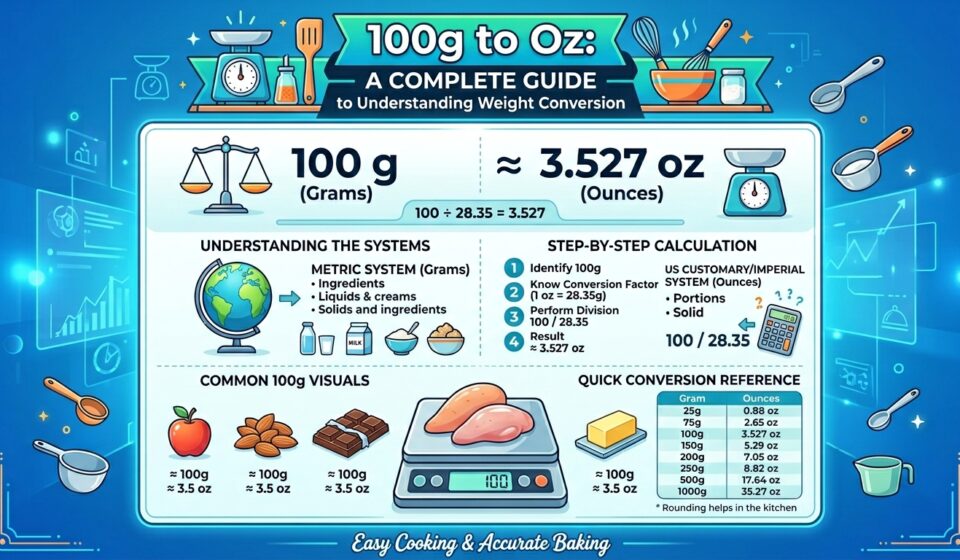
The conversion of 100g to oz is straightforward once the standard conversion factor is known. One ounce equals approximately 28.35 grams. Based on this relationship, 100 grams converts to about 3.53 ounces. This value is commonly rounded depending on the level of precision required. In everyday situations, many people simply use 3.5 ounces as an easy reference. Understanding this conversion helps simplify measurement tasks and reduces the risk of errors. Whether following a recipe or comparing product weights, knowing that 100 grams is roughly equal to 3.53 ounces provides a practical and reliable guideline.
Why Weight Conversion Matters in Cooking
Cooking often requires precise ingredient measurements to achieve consistent results. The conversion from 100g to oz is particularly useful when preparing recipes from international sources. Many recipes from Europe and Asia use grams, while others rely on ounces. Without accurate conversions, ingredient proportions may become unbalanced, affecting flavor, texture, and overall quality. Understanding weight conversions allows cooks to adapt recipes with confidence and maintain intended results. Accurate measurement is especially important in baking, where even small differences can influence outcomes. Learning common conversions such as 100g to oz helps improve kitchen efficiency and supports successful meal preparation.
The Role of Conversion in Baking Accuracy
Baking is often described as a science because it depends heavily on precise measurements. The conversion of 100g to oz becomes important when following recipes that use different measurement systems. Ingredients such as flour, sugar, butter, and cocoa powder must be measured accurately to achieve the desired texture and structure. Even minor inaccuracies can alter the final product. Understanding conversions ensures consistency across recipes regardless of their origin. Bakers who regularly work with both metric and imperial measurements benefit greatly from knowing standard conversions. Familiarity with values such as 100g to oz supports better baking results and greater confidence in the kitchen.
Using Weight Conversion for Nutrition Tracking
Many individuals monitor food intake to support fitness goals, weight management, or overall health. Nutritional information is often presented using grams, while some dietary resources use ounces. Understanding the conversion from 100g to oz makes it easier to compare serving sizes and nutritional values accurately. This knowledge helps individuals make informed decisions about food consumption and portion control. Whether tracking protein intake, carbohydrates, or calorie content, accurate measurement interpretation contributes to better dietary planning. The ability to convert between units allows users to understand nutritional information from various sources and maintain consistency in their health and wellness efforts.
Everyday Applications Beyond the Kitchen
The importance of 100g to oz extends beyond cooking and nutrition. Weight conversions are frequently needed when shipping packages, purchasing products, or comparing specifications. Different countries and industries use different measurement systems, making conversion knowledge valuable in many situations. Consumers often encounter weights listed in grams on packaging while other references use ounces. Understanding these measurements allows for easier product comparisons and more informed purchasing decisions. Whether dealing with household items, hobby supplies, or commercial products, conversion skills improve clarity and reduce misunderstandings. Practical knowledge of measurement relationships supports more effective communication and decision-making in everyday activities.
Digital Tools and Modern Conversion Methods
Technology has made converting measurements faster and more convenient than ever. Although understanding the conversion of 100g to oz remains useful, digital tools can provide instant calculations when needed. Mobile applications, online converters, and smart devices help users convert between units with minimal effort. These resources are especially valuable when working with uncommon measurements or requiring higher levels of precision. However, basic conversion knowledge remains beneficial because it helps users recognize reasonable values and verify results. Combining digital convenience with a solid understanding of measurement principles creates a more reliable and efficient approach to handling weight conversions.
Common Mistakes When Converting Measurements
Despite the simplicity of many conversions, mistakes can still occur. One common issue involves confusing weight measurements with volume measurements. Understanding that 100g to oz refers to weight rather than volume helps prevent errors. Another challenge arises from rounding values too aggressively, which can affect accuracy in situations requiring precision. Some individuals may also confuse fluid ounces with weight ounces, leading to incorrect calculations. Awareness of these potential mistakes improves conversion accuracy and reduces misunderstandings. Developing a habit of verifying measurements and understanding the units involved contributes to more reliable results in cooking, nutrition, and other practical applications.
Building Confidence With Measurement Knowledge
Learning how to convert 100g to oz is part of developing broader measurement skills that support daily life. Confidence with conversions allows individuals to work more effectively with international recipes, product labels, and technical information. Understanding both metric and imperial systems provides flexibility and improves communication across different regions and industries. As people become more familiar with common conversions, they spend less time calculating and more time focusing on their tasks. Measurement knowledge also encourages independence and accuracy. Whether for personal use or professional purposes, mastering simple conversions helps build practical skills that remain valuable in countless situations.
Conclusion
Understanding the conversion of 100g to oz is a useful skill that supports accuracy in cooking, baking, nutrition, shopping, and many other everyday activities. Since 100 grams equals approximately 3.53 ounces, this simple conversion provides a reliable reference point when working between metric and imperial measurement systems. Knowledge of weight conversions helps eliminate confusion, improve consistency, and support informed decision-making. While digital tools offer quick assistance, understanding the underlying principles remains valuable. By becoming familiar with common conversions such as 100g to oz, individuals can navigate measurements more confidently and handle a wide range of tasks with greater precision and ease.