
What Are Carpet Beetles and Why Are They Found Indoors
Carpet beetles are small insects commonly found in homes, warehouses, museums, and other buildings where natural fibers are present. Adult beetles feed mainly on pollen and nectar outdoors, while their larvae consume materials such as wool, silk, feathers, leather, and animal-based fabrics. Because they can survive in hidden locations like closets, carpets, and upholstered furniture, infestations often go unnoticed until damage becomes visible. Their ability to thrive in quiet, undisturbed areas makes them persistent household pests, encouraging many people to investigate carpet beetle bites when unexplained skin irritation begins to appear.
The Truth About Carpet Beetle Bites
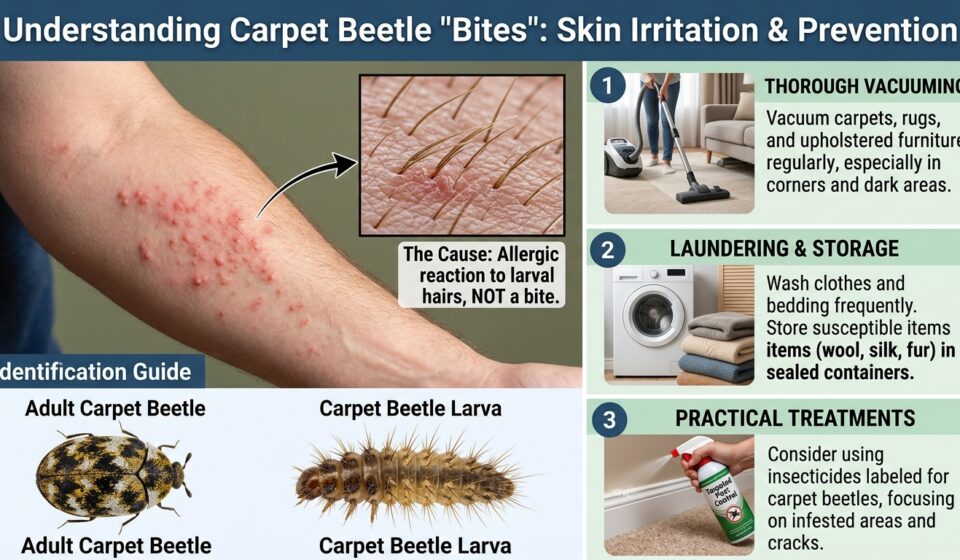
Despite the popular phrase carpet beetle bites, these insects do not actually bite or feed on human skin. The irritation many individuals experience usually comes from contact with the tiny hairs covering carpet beetle larvae. These hairs can cause allergic reactions that resemble insect bites, leading to redness, itching, or small raised bumps. Because the symptoms closely mimic bites from bed bugs or mosquitoes, misidentification is common. Understanding that carpet beetle bites are typically allergic skin reactions rather than true bites helps people pursue more accurate treatment and pest control solutions.
Common Symptoms Mistaken for Carpet Beetle Bites
Skin reactions associated with carpet beetle larvae vary from person to person depending on individual sensitivity. Some people develop small itchy welts, while others notice red patches, mild swelling, or persistent irritation after contact with contaminated fabrics or surfaces. The affected areas often appear on exposed skin but can occur anywhere the larvae or their hairs have touched clothing or bedding. Unlike actual insect bites, these reactions do not result from feeding activity. Recognizing these symptoms helps distinguish carpet beetle bites from other skin conditions and encourages timely investigation of potential household infestations.
How Carpet Beetle Larvae Trigger Allergic Reactions
The larvae responsible for confusion surrounding carpet beetle bites possess tiny bristle-like hairs designed to protect them from predators. When these hairs become airborne or remain trapped in fabrics, they may come into contact with human skin and trigger allergic dermatitis. Sensitive individuals often experience itching or rashes shortly after exposure. Repeated contact can increase discomfort if the underlying infestation remains untreated. Since allergic responses differ among individuals, some household members may show noticeable symptoms while others experience no reaction at all despite living in the same environment.
Identifying Carpet Beetle Activity Inside the Home
Detecting carpet beetle infestations early reduces both property damage and the likelihood of skin irritation associated with carpet beetle bites. Homeowners should inspect closets, carpets, upholstered furniture, air vents, storage boxes, and natural fiber textiles for signs of larvae or shed skins. Tiny irregular holes in clothing or blankets may indicate feeding activity. Adult beetles are often found near windows because they are attracted to light after emerging from hidden breeding areas. Careful inspection allows prompt intervention before populations expand and create larger cleaning or restoration challenges throughout the property.
Effective Cleaning and Prevention Strategies
Maintaining a clean home remains one of the most effective ways to reduce carpet beetle populations and minimize concerns about carpet beetle bites. Frequent vacuuming removes larvae, shed hairs, and food sources that support infestation growth. Washing fabrics, storing seasonal clothing in sealed containers, and reducing dust accumulation also help prevent problems. Regular inspection of stored textiles can reveal early signs of damage before infestations spread. Consistent household maintenance combined with proper storage practices creates an environment that is less favorable for carpet beetles and their developing larvae.
When Professional Pest Control May Be Necessary
While small infestations can often be managed through cleaning and monitoring, larger populations may require professional pest control services. Specialists can identify breeding sites hidden behind walls, beneath flooring, or inside difficult-to-access storage spaces. Targeted treatment methods reduce infestations while minimizing disruption to household activities. Professional inspections also help confirm whether carpet beetle larvae are responsible for suspected carpet beetle bites or whether another pest may be involved. Accurate identification ensures homeowners invest in the most effective solution rather than applying unnecessary or ineffective treatments.
Caring for Skin Irritation Caused by Exposure
If exposure to carpet beetle larvae results in an allergic skin reaction, keeping the affected area clean and avoiding further contact with contaminated materials often supports recovery. Mild irritation typically improves after the source of exposure is removed, although sensitive individuals may require additional medical advice if symptoms persist or worsen. Avoiding excessive scratching reduces the risk of skin damage and secondary infection. Understanding that carpet beetle bites are usually allergic reactions encourages people to focus on eliminating environmental exposure instead of searching for nonexistent biting insects within the home.
Long-Term Protection Against Future Infestations
Preventing future infestations requires ongoing attention to cleanliness, storage practices, and routine inspections throughout the home. Seasonal cleaning of closets, regular vacuuming beneath furniture, and careful maintenance of natural fiber materials reduce opportunities for carpet beetle larvae to establish breeding populations. Monitoring areas where pets sleep or where lint accumulates can also lower infestation risk. Consistent preventive habits protect valuable belongings while decreasing the possibility of allergic reactions commonly mistaken for carpet beetle bites. Long-term awareness remains one of the most reliable methods for maintaining a healthy and comfortable indoor environment.
Conclusion
Understanding the facts about carpet beetle bites helps separate common misconceptions from reality and encourages effective action. Although carpet beetles do not bite humans, their larvae can cause allergic skin reactions that resemble insect bites and create unnecessary concern. Early identification, regular cleaning, proper storage of natural fabrics, and timely pest management all contribute to reducing exposure and preventing infestations. By maintaining good household hygiene and recognizing the true source of irritation, homeowners can protect both their living spaces and personal comfort while avoiding confusion with other insect-related skin problems.