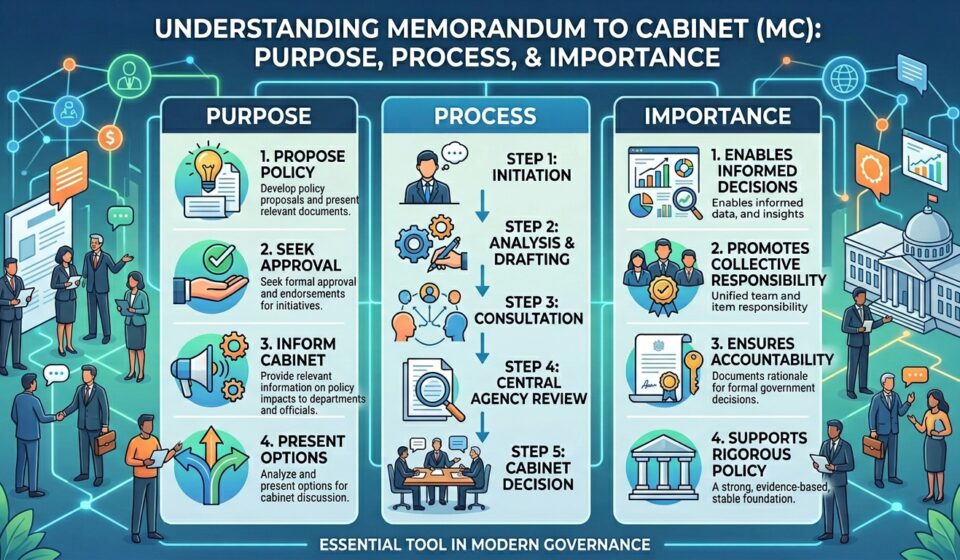

Understanding the Meaning of a Memorandum to Cabinet
A memorandum to cabinet is a formal document prepared to present a policy proposal, strategic initiative, or significant government decision for consideration by cabinet ministers. It summarizes the issue, explains the reasons for action, and outlines recommended solutions supported by analysis and evidence. The document enables decision-makers to review complex matters in a structured format before reaching conclusions. By organizing information clearly and logically, a memorandum to cabinet improves communication among government officials and supports transparent policy development. Its role extends beyond documentation by facilitating informed discussions that influence national priorities and administrative effectiveness.
The Purpose of a Memorandum to Cabinet
The primary purpose of a memorandum to cabinet is to provide ministers with sufficient information to evaluate policy options and make informed decisions. Government leaders often face issues involving economic development, public services, infrastructure, environmental management, and social policy that require detailed examination. The memorandum presents objectives, expected benefits, financial considerations, and potential challenges associated with proposed actions. This comprehensive approach ensures that important decisions are supported by evidence rather than assumptions. By promoting thoughtful analysis and strategic planning, the memorandum contributes significantly to responsible governance and effective public administration across diverse policy areas.
Key Components of a Memorandum to Cabinet
A well-prepared memorandum to cabinet typically includes several essential sections that help organize information for decision-makers. It generally begins with an explanation of the issue, followed by background information, policy objectives, and proposed recommendations. Financial implications, legal considerations, implementation strategies, and potential risks may also be addressed to provide a complete understanding of the proposal. Supporting analysis helps cabinet members evaluate alternatives while considering long-term consequences. Presenting information in a logical and structured manner enhances clarity, encourages productive discussion, and supports efficient decision-making within government institutions responsible for shaping public policy.
The Role of Research and Evidence
Research and evidence form the foundation of every effective memorandum to cabinet because sound policy decisions depend on accurate information and careful analysis. Government officials must evaluate economic data, legal requirements, stakeholder perspectives, and potential outcomes before presenting recommendations. Reliable evidence strengthens the credibility of proposals while reducing uncertainty during cabinet discussions. Data-driven analysis also allows decision-makers to compare different options and anticipate possible challenges before implementation. By emphasizing objective research rather than speculation, the memorandum supports responsible governance and increases confidence that adopted policies will effectively address the issues they are designed to solve.
How a Memorandum Supports Government Decision-Making
The memorandum to cabinet plays a vital role in government decision-making by creating a structured process through which complex issues can be analyzed and discussed. Cabinet members often represent different areas of expertise and policy responsibility, making comprehensive documentation essential for informed collaboration. The memorandum provides a shared understanding of objectives, challenges, and proposed solutions while encouraging thoughtful evaluation before commitments are made. This organized approach reduces misunderstandings and promotes consistency in policy development. As a result, government decisions become more strategic, coordinated, and aligned with broader national priorities and long-term administrative goals.
The Importance of Clear and Professional Communication
Effective communication is essential when preparing a memorandum to cabinet because decision-makers rely on concise and understandable information to evaluate proposals efficiently. Technical details should be presented in a logical manner without unnecessary complexity or ambiguity. Clear writing allows ministers to focus on the substance of the proposal rather than interpreting unclear language. Professional communication also strengthens credibility by demonstrating careful preparation and analytical discipline. A well-written memorandum improves collaboration among government departments while supporting timely and informed decisions that address public needs and contribute to effective administration across multiple sectors and policy areas.
Challenges in Preparing a Memorandum to Cabinet
Preparing a memorandum to cabinet involves balancing detailed analysis with clear presentation while addressing the diverse concerns of policymakers. Writers must gather reliable information, evaluate competing policy options, and anticipate potential questions from decision-makers. Limited time, changing priorities, and evolving circumstances can complicate the drafting process, requiring flexibility and careful judgment. Ensuring consistency between financial analysis, legal considerations, and strategic objectives also demands close coordination among departments. Despite these challenges, thorough preparation and evidence-based reasoning enable the memorandum to serve as a valuable instrument for supporting high-quality government decision-making and policy development.
The Future of Policy Documentation in Government
As technology continues transforming public administration, the memorandum to cabinet is likely to evolve through greater digital integration and data-driven analysis. Electronic collaboration tools, advanced research systems, and improved information management can enhance the efficiency of preparing and reviewing policy proposals. Artificial intelligence and analytical software may assist officials in evaluating complex scenarios while maintaining high standards of accuracy and accountability. Despite technological advancements, the fundamental purpose of the memorandum will remain unchanged: providing structured, reliable, and well-reasoned information that supports informed cabinet discussions and effective governance in an increasingly complex policy environment.
Conclusion
The memorandum to cabinet is an essential document that supports informed government decision-making through structured analysis, clear communication, and evidence-based recommendations. It enables cabinet ministers to evaluate policy proposals by presenting objectives, financial implications, implementation strategies, and potential challenges in an organized format. Strong research, professional writing, and careful planning ensure that this document contributes to responsible governance and effective public administration. As governments continue addressing complex national issues, the memorandum to cabinet will remain a valuable tool for promoting transparency, strategic thinking, and coordinated policymaking that serves the long-term interests of society.