Surface UEFI Hard Drive Icon: Understanding Its Purpose and Importance for Device Management

What the Surface UEFI Hard Drive Icon Represents
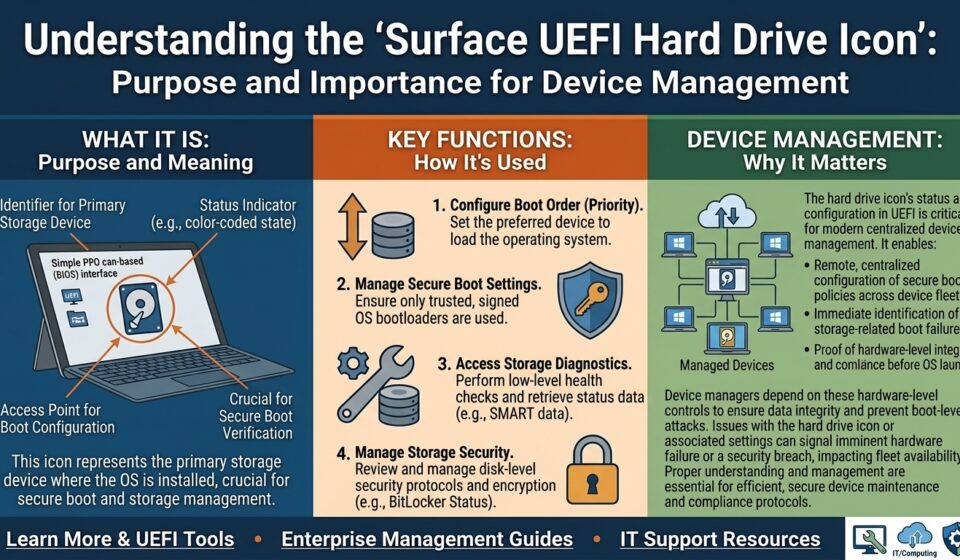
The Surface UEFI hard drive icon serves as a graphical representation of the internal storage device detected by the firmware before the operating system loads. Unlike standard desktop environments, UEFI provides a low-level interface that communicates directly with hardware components. The hard drive icon indicates that the storage device is available and recognized by the system during the boot process. When users access UEFI settings, this icon helps identify storage-related options, making navigation easier and improving the overall experience for those performing maintenance, diagnostics, or configuration changes on their Surface device.
Why the Icon Is Important During Startup
During the startup sequence, the Surface UEFI hard drive icon plays an indirect but valuable role by showing that the firmware has identified the primary storage device. Since the operating system depends on this drive to load successfully, its recognition is essential for normal performance. If the icon corresponds to a detected drive, users can generally proceed with confidence that storage hardware is functioning at a basic level. However, if issues occur during boot, reviewing the UEFI interface and associated storage settings can provide useful clues before attempting more advanced troubleshooting procedures.
Common Reasons Users Notice the Hard Drive Icon
Many people first encounter the Surface UEFI hard drive icon while trying to solve a startup issue or after accidentally entering firmware settings. Others may see it when installing a new operating system, performing system recovery, or adjusting boot priorities. The icon becomes especially relevant when external storage devices or USB installation media are connected, as users compare available boot options. Because UEFI is designed for system-level management, the hard drive icon acts as a simple visual reference that helps distinguish internal storage from other connected devices during technical operations.
Relationship Between UEFI and Boot Configuration
The Surface UEFI hard drive icon is closely connected to the boot configuration process because the firmware determines which storage device should launch the operating system. UEFI replaces many functions traditionally handled by older BIOS systems while offering improved security and flexibility. The hard drive icon often appears alongside other boot choices, allowing users to verify that the internal drive remains available and correctly prioritized. Proper boot configuration ensures faster startup, reliable operating system loading, and compatibility with modern security technologies that protect data and system integrity on Surface devices.
Troubleshooting Issues Related to the Hard Drive Icon
If the Surface UEFI hard drive icon appears but the device still fails to start normally, users should investigate software and hardware conditions carefully. Corrupted operating system files, damaged boot records, or storage errors may prevent successful loading despite the drive being detected. On the other hand, if the storage device does not appear in UEFI, the issue could involve hardware failure or connection problems. Restarting the device, checking recovery options, and verifying firmware settings are practical steps that can help identify the source of the problem before seeking professional technical assistance.
Security Features Connected to Surface UEFI
Modern Surface devices include several security features managed through UEFI, and the Surface UEFI hard drive icon exists within this protected environment. Secure Boot, trusted hardware verification, and firmware controls help ensure that only authorized software starts during the boot process. Because the internal storage contains sensitive information and operating system components, UEFI settings contribute to maintaining data security from the earliest stage of device operation. Understanding this relationship allows users to appreciate why firmware access is carefully controlled and why changing settings should always be done with caution and knowledge.
Best Practices When Accessing Surface UEFI Settings
When working with the Surface UEFI hard drive icon and related settings, users should avoid making unnecessary changes unless they understand the consequences. Firmware options directly influence how the device starts and communicates with storage hardware. Creating backups before modifying boot settings is a wise precaution because accidental changes may prevent normal startup. Reading available documentation and following recommended recovery procedures can reduce the risk of errors. By approaching UEFI carefully, users can safely inspect storage information while preserving system stability and minimizing interruptions to everyday productivity.
Future Developments in Firmware and Storage Management
As computing technology continues to evolve, interfaces like Surface UEFI will likely become even more user-friendly while maintaining advanced capabilities behind the scenes. The Surface UEFI hard drive icon may remain a familiar symbol representing storage detection, but future firmware designs could include richer diagnostics and clearer visual guidance for users. Faster solid-state drives, stronger security standards, and improved recovery tools will further enhance the relationship between firmware and storage management. These developments will help simplify troubleshooting while supporting reliable performance for both everyday users and technology professionals.
Conclusion
The Surface UEFI hard drive icon is more than a simple graphic within firmware settings because it reflects the connection between the system and its primary storage device. Understanding its meaning helps users navigate boot configuration, diagnose startup concerns, and appreciate the role of UEFI in modern computing. Whether performing maintenance, recovering a system, or simply exploring device settings, recognizing the purpose of this icon contributes to better decision-making and increased confidence. A clear understanding of firmware and storage interactions ultimately supports a more secure, reliable, and efficient experience with Microsoft Surface devices.

saif abbasi
Saif Abbasi is a content writer for Americas Best, covering everything from current trends to everyday tips. He believes in the power of clear communication and strives to create content that resonates with a diverse digital audience.